Legacy to Cloud Enterprise Healthcare SaaS Modernization
Summary
I led the three-year redesign and rebuild of a legacy healthcare SaaS platform launched in October 2026. Redesigned workflows are estimated to reduce task steps by up to 80%. This case study shows how systems thinking, continuous research, and close engineering collaboration reduced risk across the transformation.
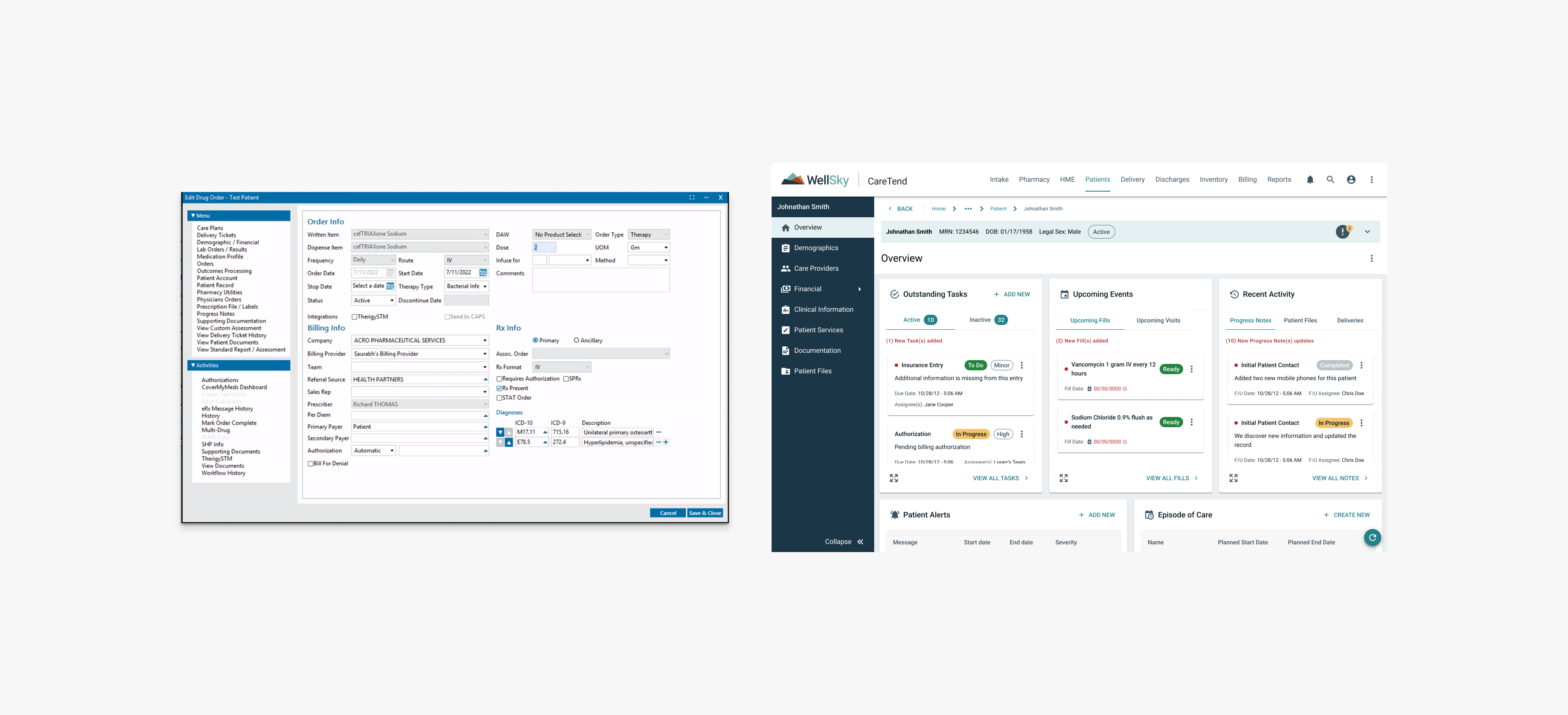
Modernizing an enterprise healthcare platform meant coordinating extensive requirements across workflows spanning intake through discharge. I managed that complexity by creating repeatable design, research, and delivery systems.
Here are my guiding principles when doing work like this:
- Cultivate Relationships- internally and externally
- Understand the Current Software
- How might the software change with UI best practices, industry standards, accessibility requirements, etc.?
- Leverage frequent User Testing to Lower Risk
- Stay curious to internal processes
Process
Designers should focus on the highest value-add work till it’s solved for. This philosophy led me to the following:
- Established shared component and interaction patterns
- Standardized concept reviews and customer feedback
- Aligned design decisions with the application architecture
- Created reusable design systems for 30+ applications
- Built repeatable moderated and unmoderated testing practices
I worked across Figma, code, GitHub, and weekly research sessions. I paired regularly with engineers, reviewing implementation, and maintaining design tokens. Working closely with engineering shortened feedback loops while reducing platform risk and technical debt.
Cultivate Relationships
I built trust by involving engineers early, making design rationale visible, and treating customers as partners. This working style helped the team resolve ambiguity and make decisions that worked across the large product surface.
Understand Current Software
Requirements gathering, research, and concept testing revealed where the existing interface conflicted with clinical workflows. It also uncovered unsupported mental models, including Patient Overview, Episode of Care, Workflow Builder, Tasks, and single-order discharge.
Early Requirements and JTBD "Jobs to be Done"
The jobs guided the concept-testing. I regularly tested whether proposed information architecture, mental models, and end-to-end flows supported the intended work.
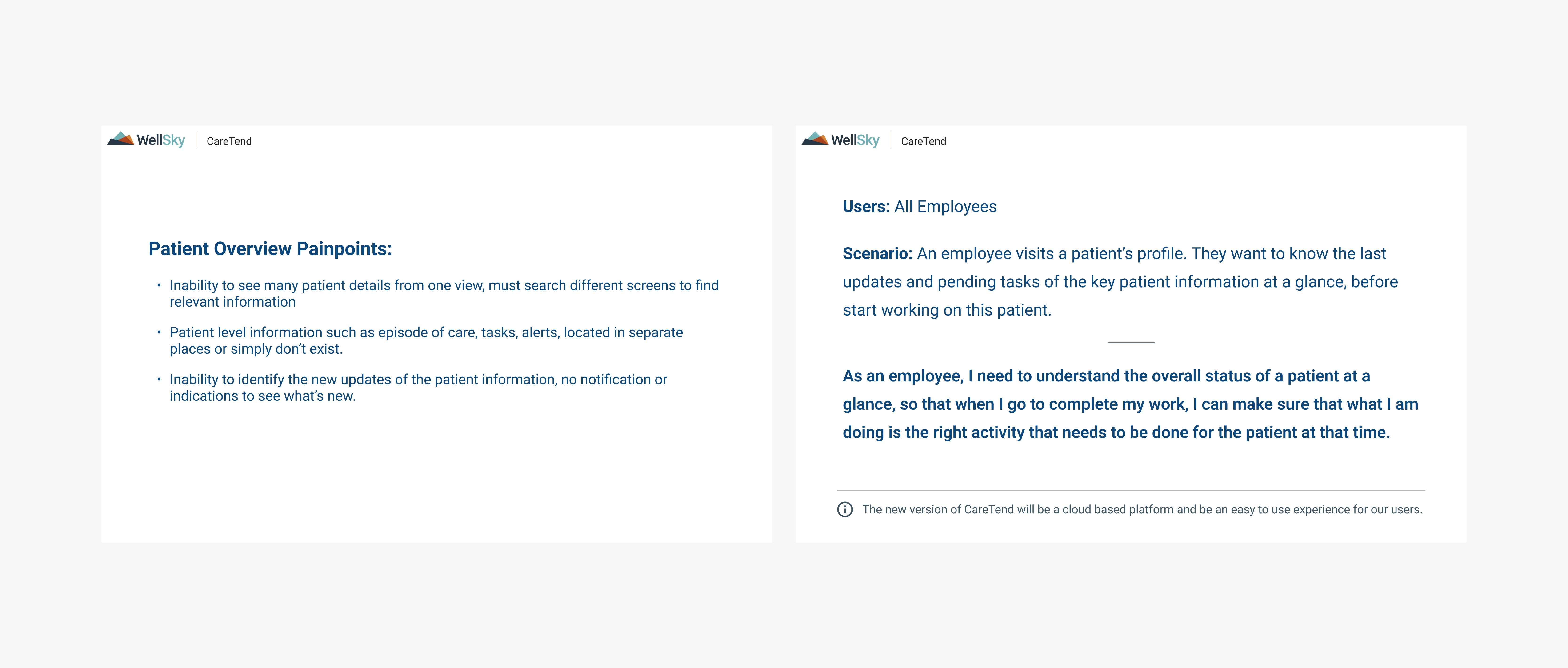
JTBD informing UI and Concept Testing
These sessions helped us find problems while ideas were still inexpensive to change and kept the redesign anchored in user outcomes rather than feature parity alone.
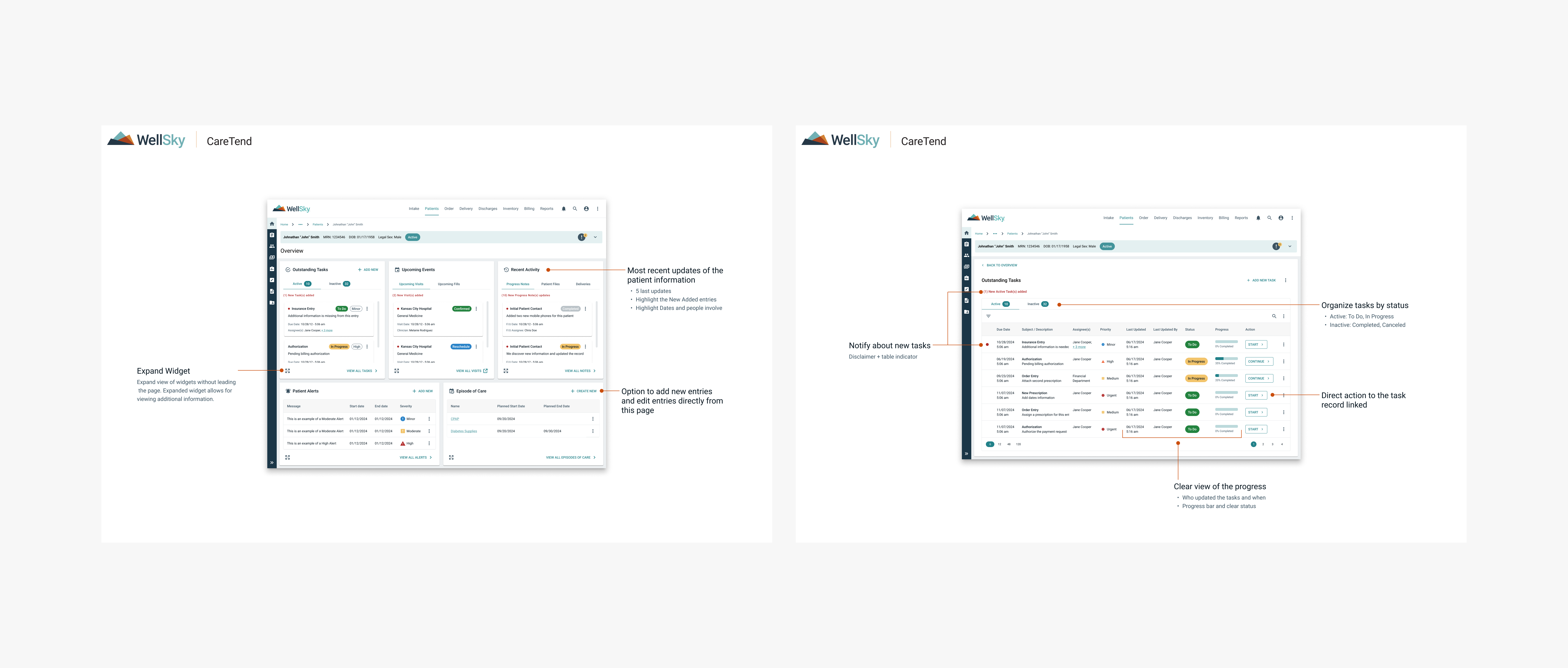
How Might the Software Change?
The legacy product could not be our only source of requirements. We combined evidence from research within, Excel, Figma, and Jira, then encoded recurring decisions in a semantic design system. This eventually allowed AI to generate consistent UI from documented requirements. Read more about that here.
Angular and Angular Material
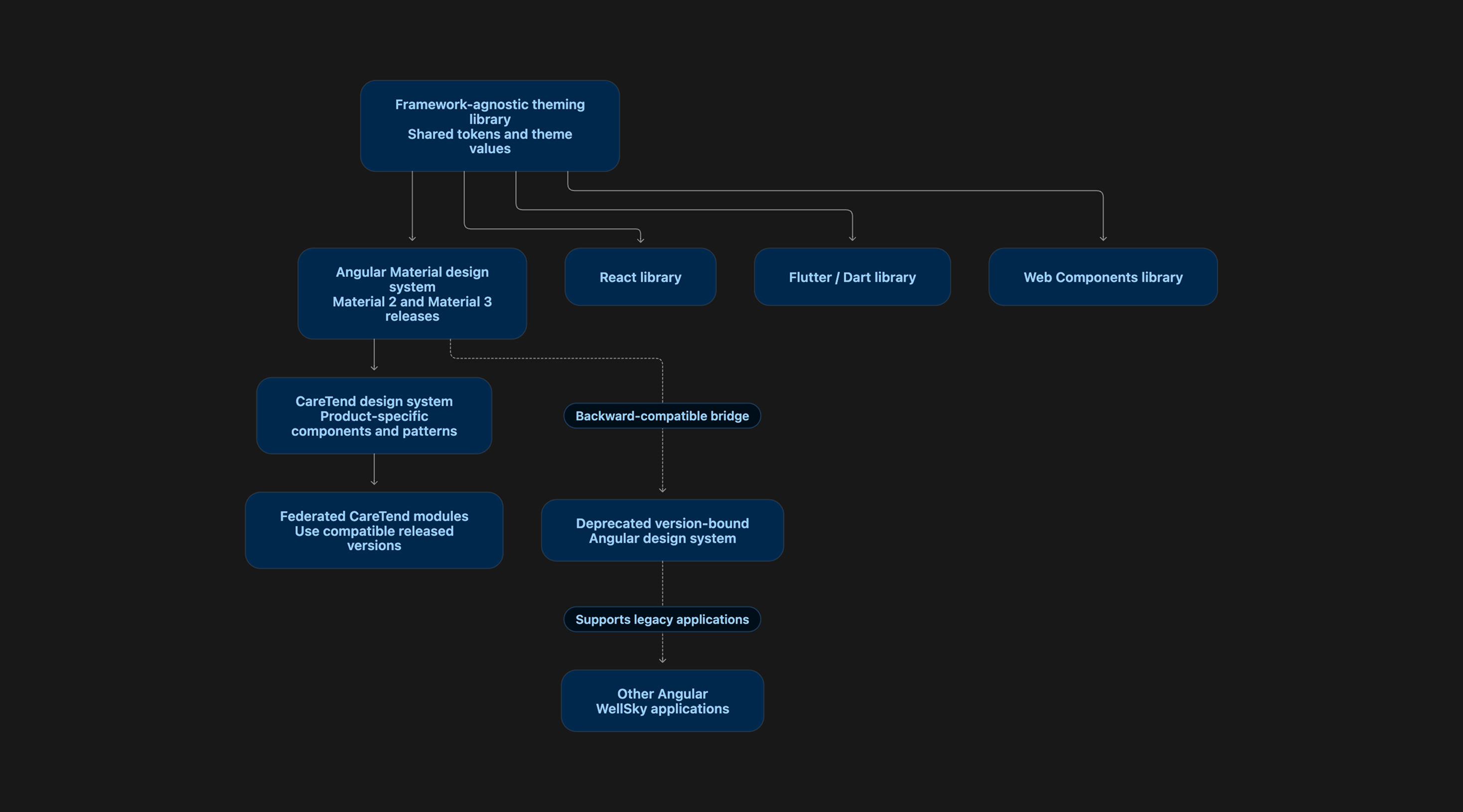
Writing in Angular Material meant dealing with versioning. Migrating from Material 2 to Material 3 introduced significant compatibility challenges. We addressed them with layered design-system repositories and module federation, allowing downstream applications to adopt different Angular Material versions while sharing the same primitive and semantic tokens. The system supported both weighted and tonal palettes, with targeted overrides where Material defaults were insufficient. For light reading about M2 to M3 migrations, enjoy this reddit thread.
Design Systems
The existing Figma design system contained 170 components but had not been updated since 2020. I led its alignment with Angular Material and shared design tokens:
- Matched foundational components to coded names and properties
- Added custom components only for unsupported workflows
- Connected Figma decisions to code through shared variables
- Kept product-specific patterns in downstream systems
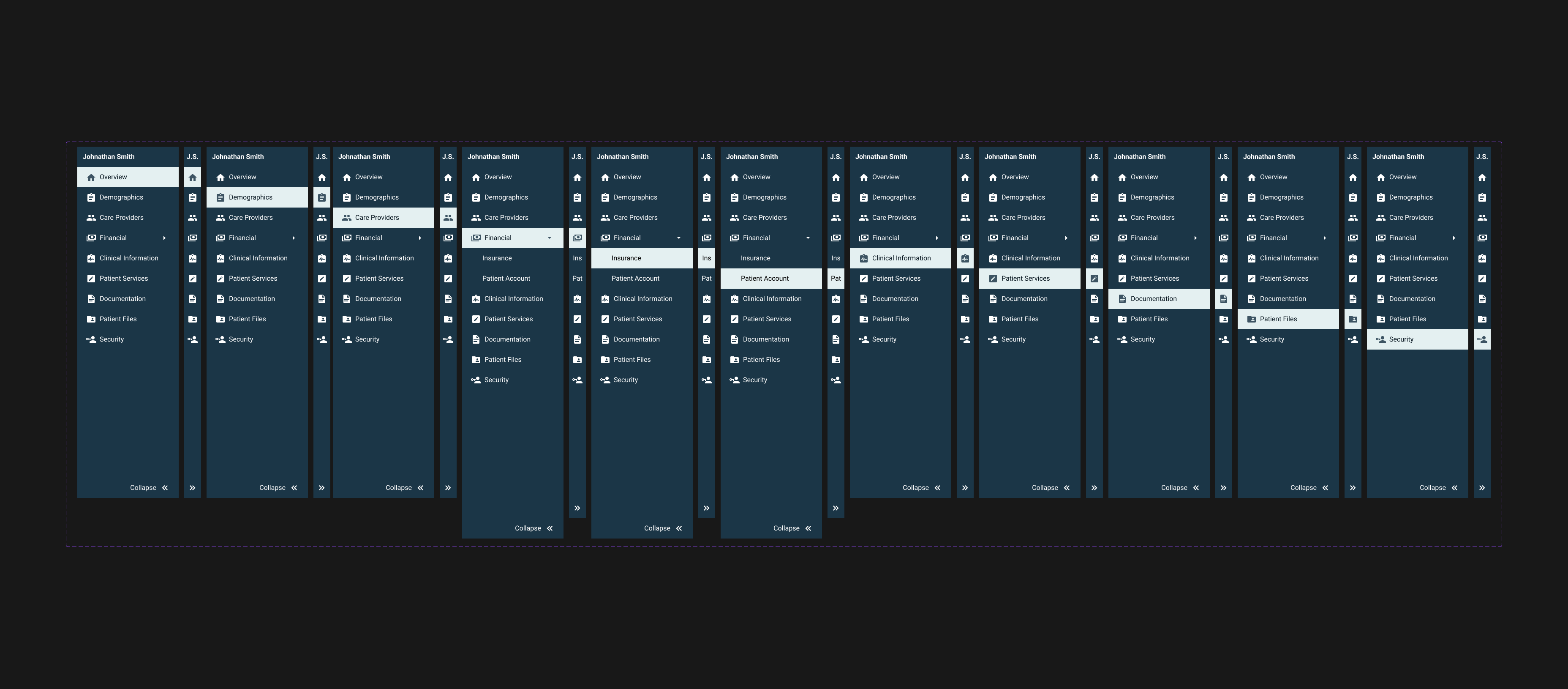
WellSky Design System

Product Specific Design System
To mimic our dependency chain, an application specific design system was also created with more opinionated components such as side nav, header, certain table-cell types, and more.
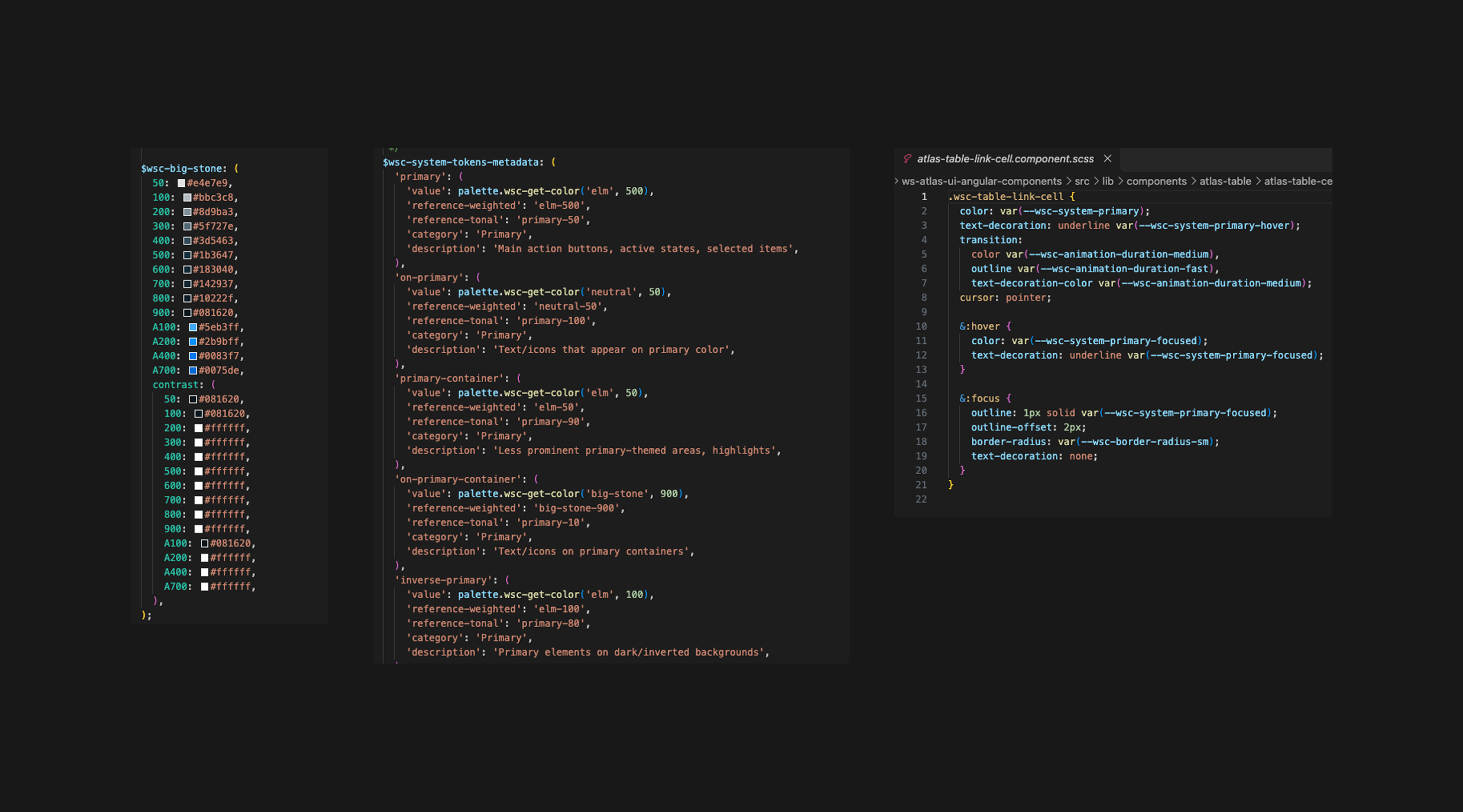
Coded Design System
Aligning Figma and Code was paramount to enabling AI for coding in the 'WellSky Way.' The images below show css variables flowing from a primitive ramp, to JSON semantic tokens, to an angular link table-cell which I wrote.
High-Fidelity UI Designs
My team used high-fidelity Figma designs for complex and exception-heavy workflows, then shifted simpler concepts into Figma Make or code as the design system matured. I planned work across two product designers, two associate designers, and one researcher while overseeing thousands of screens and trade-show prototypes.

UI Prototpes
High-fidelity prototypes were created for showcasing the latest version at trade-shows and soliciting user feedback.

Frequent User Testing
Extensive user testing was performed throughout the project. Early concept testing led to high-fidelity designs. High risk high-fidelity designs led to additional validation. Once developed, moderated user testing was performed in a stage environment.
Moderated User Testing in Stage
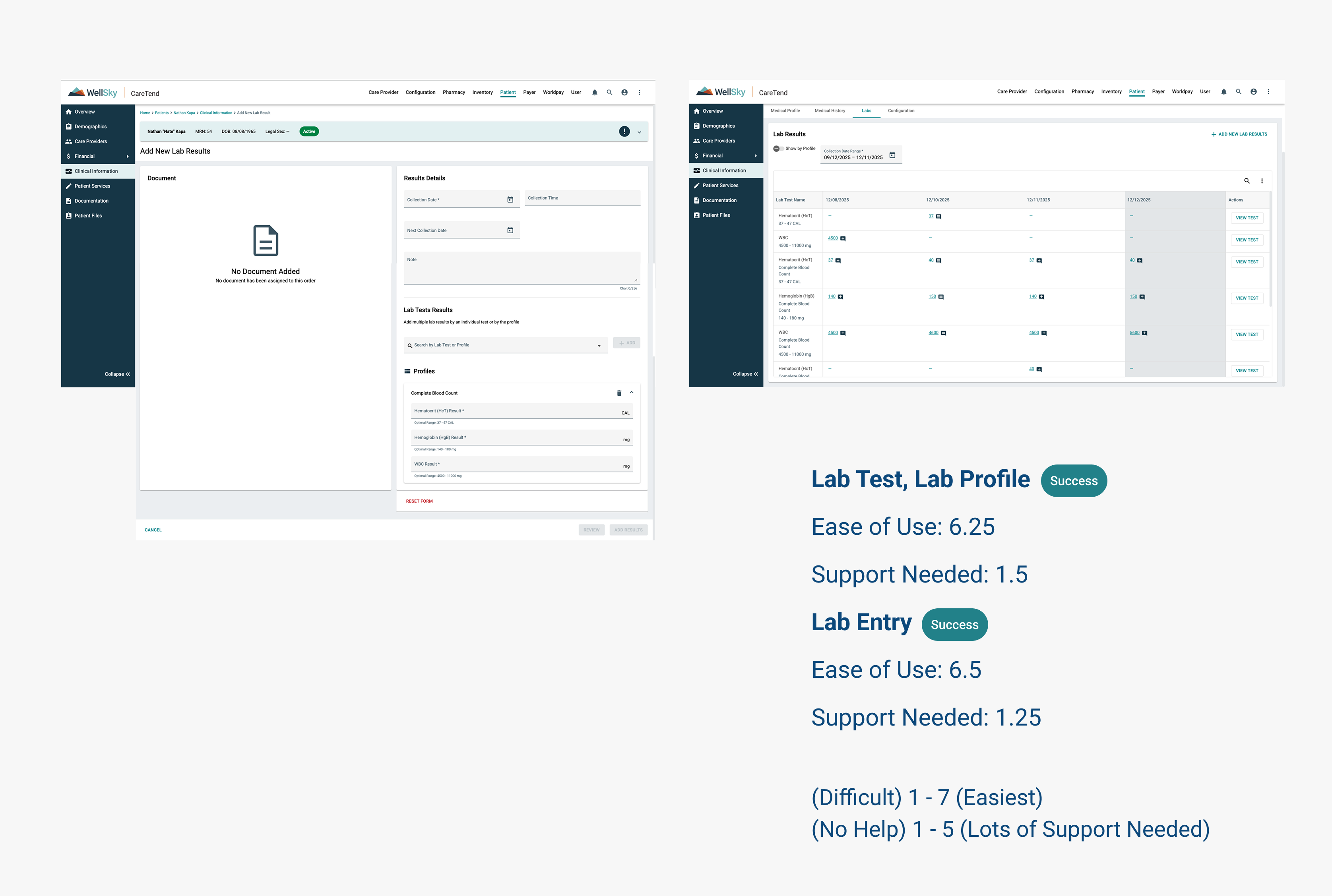
For six months, I ran four moderated sessions each week in the staging environment. We recorded task success, required assistance, bugs, and missing requirements, then routed findings to the appropriate product teams. Planning, facilitation, and synthesis required about six hours per week.
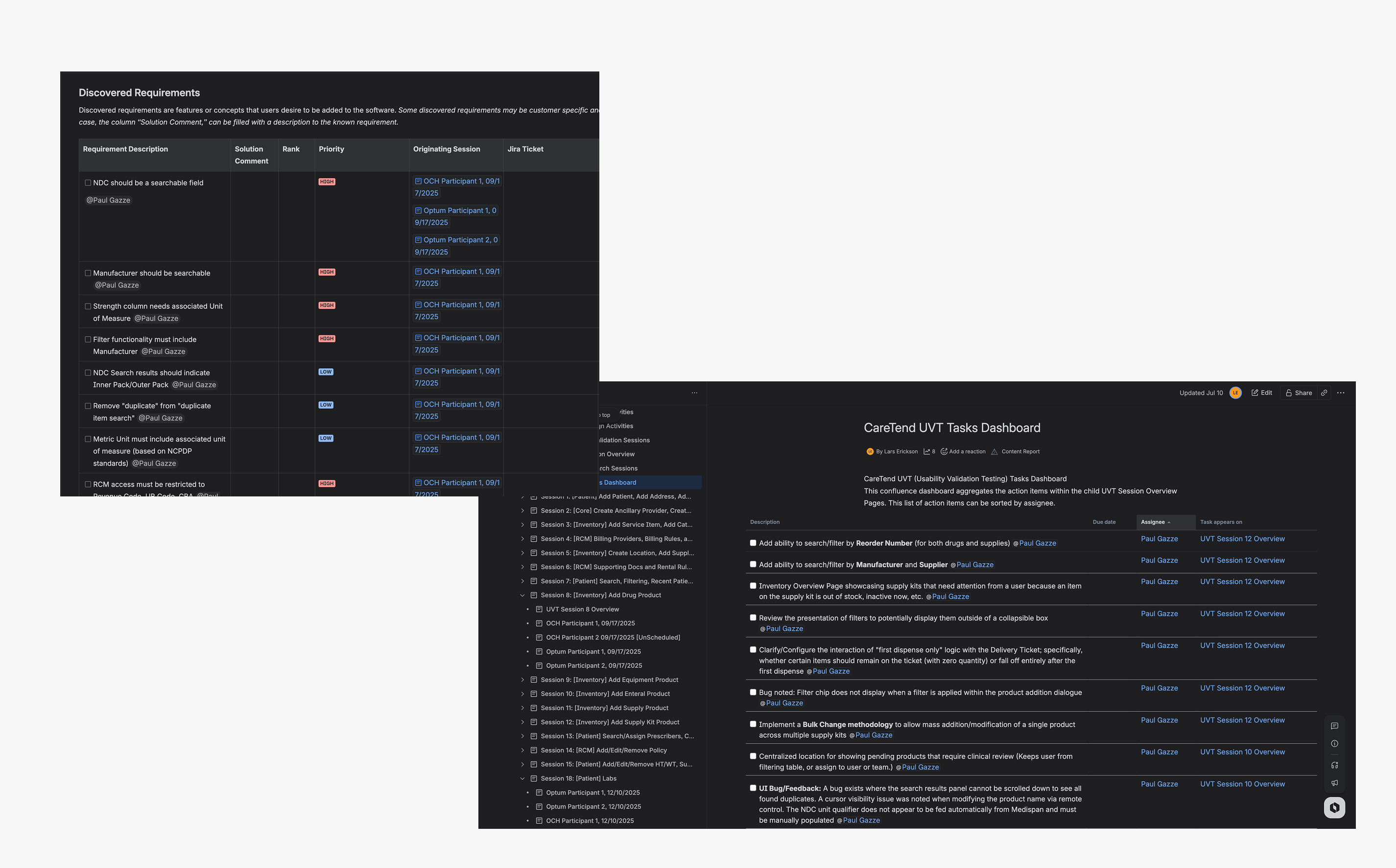
Uncovered Requirements
We prioritized requirements uncovered during testing and routed them to the appropriate domain teams. Jira and Confluence templates made the process repeatable, while Atlassian integrations connected research findings to related tickets.
Unmoderated User Testing in Stage
The WellSky design team evaluated leveraging UserTesting or Userlytics for performing unmoderated user testing. We landed on using Userlytics, provided users credentials to login to stage and started performing unmoderated user testing instead of moderated user testing.
Internal Processes
This project required changing how the organization worked. I created shared practices that connected designs to implementation: critique and presentation standards, reusable prototype patterns, structured research readouts, design-system contribution rules, and design review during development.
I worked directly in the codebase to resolve ambiguity and ensure our front-end best practices were being followed. I was the Lead Design System designer managing CSS variables, pairing with engineers, reviewing pull requests, and auditing implementation against the design system. This shortened the feedback loop between Figma and production and gave engineering partners a clearer path to reuse established patterns.
Design Reviews, Hackathons, and Presentations
On any given week, I presented and reviewed designs, code, and collaborated/ mentored my peers. As frequently as I could, I worked to get user feedback in front of engineers so they felt more connected to the outcome of the work. Working across the enterprise organization meant brokering conversations and buy-in across many different business groups.
StoryBook
Adopting StoryBook was a major internal cultural shift. StoryBook allowed engineering, design, and product a shared understanding of our front-end coding best practices and what components were available.
Engineering Processes
Our engineering processes evolved a lot to better adopt the design system approach. ADR's (Architecture Decision Records) were created to ensure AI and engineers worked from a shared understanding. CoPilot modes were created for planning and executing work in the code editor, GitHub Agents were created for reviewing code at scale.
Outcome
The rebuilt application launched in October 2026 after three years of cross-functional work. The redesigned workflows were estimated to reduce the number of required steps by as much as 80%. The project also produced a reusable design-system foundation that could support more than 30 applications across the organization.
The team proved that a broad, technically constrained healthcare platform could be modernized around how healthcare professionals actually work. Not only this, but as we worked, we pioneered the 'WellSky Way' of creating software.
